
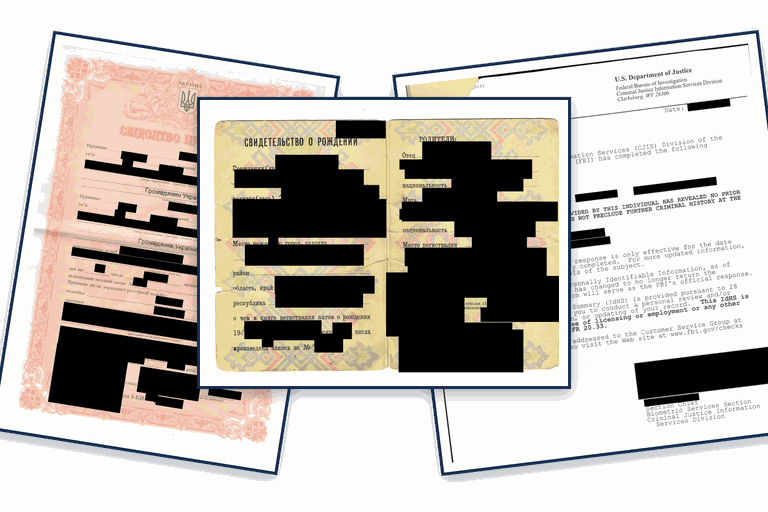



Why we publish these cases
Descriptions of a translation service tend to sound alike. The difference shows on real documents: a seal stamped over a date, a surname that changes form after marriage, a father’s field printed with dashes, an apostille attached to the report it certifies. Each case in this section is one real order, chosen because it is typical of documents we translate often. It shows the original with personal data blacked out, explains what made it difficult and how we handled it, and links the official rules relevant to documents like it.
How we protect the people behind the documents
- Names, dates, places, addresses, document and account numbers, amounts, signatures, seals with identifying text, photos and codes are covered with solid black boxes on the original image.
- What stays visible is the printed form, its captions and details that do not identify the person, such as course names or account types.
- The texts describe the document type and the work, never the person. No case says who the client was or when the order was placed.
- The translations themselves are not shown.
What every case has in common
A professional translator did the work and a second linguist checked names, dates and numbers against the original. The client received one signed PDF by email. When the destination was Spain and a sworn translation was required, the work went to accredited sworn translators appointed by Spain’s Ministry of Foreign Affairs, with Prime coordinating, and was delivered as a PDF signed with the sworn translator’s qualified electronic signature. The apostille in the FBI case was obtained by the client from the Department of State before the translation; Prime does not obtain apostilles, notarize or mail paper copies. In every case the receiving office makes its own decision on document sufficiency and acceptance.
