Certified document translations · Online, nationwide
Our services

Layout Services

Updated

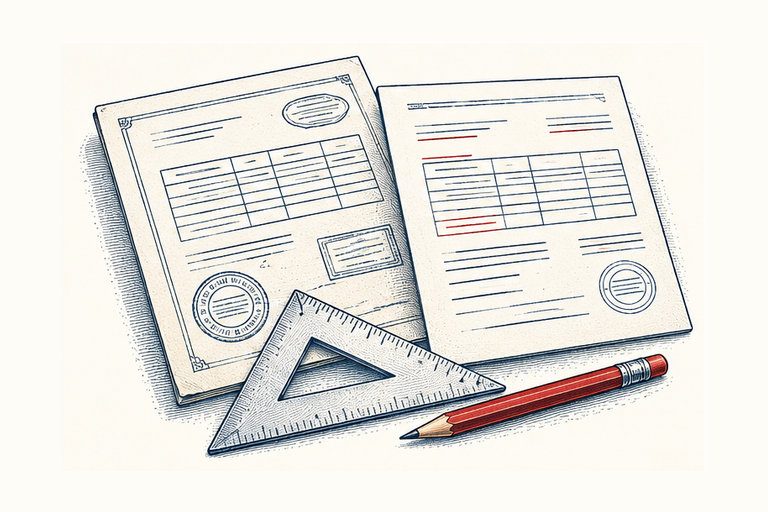
Translations that mirror the original page: seals and signatures described in place, tables with columns and totals aligned, form fields in order. Standard formatting on every certified job, full DTP for complex files.

  • From $19.95 per page
  • Signed PDF from 24 hours
  • Certified per USCIS translation rules
Get a free quote Upload the document; the quote says whether standard formatting is enough or full layout is recommended.

Layout services at a glance

Mirroring the layout means the English translation keeps the structure of the source: sections in the same order, the same table columns and totals, form fields in the same sequence, and every seal, signature and handwritten note described in brackets where it sits on the page. The offices we checked ask for completeness, accuracy and a signed certification, not a page-by-page replica: USCIS requires a full translation and rejects summaries (8 CFR 103.2(b)(3)); the immigration courts want the certificate typed and attached to the document (Practice Manual 2.3(a)). Check your recipient's own instructions. The mirrored page lets a reviewer confirm that nothing was skipped. Standard formatting comes with every Prime certified translation; full desktop publishing is a separate service for complex files.

Cost
From $19.95 per page, standard formatting included; full layout quoted per page
Turnaround
From 24 hours; full layout projects get a date in the quote
Two levels
Standard formatting on every certified translation, or full DTP for complex documents and business files
Seals and signatures
Described in brackets with the text inside translated, never copied as images

What each office says about format

None of the offices below prescribes a page layout for a translation; each says what the translation must contain. The mirrored format exists for the person who checks it against the original. Other recipients may have rules of their own.

Show all 5 offices and their rulesHide the list
WhoRequirementSource
USCIS (Green Card, naturalization, family petitions) A full English translation plus the translator's certification that it is complete and accurate and that the translator is competent. The Policy Manual adds that a summary prepared by a translator is unacceptable. Neither text says anything about layout. Policy Manual Vol. 1, Part E, Chapter 6, Section E. 8 CFR 103.2(b)(3)
Immigration courts (EOIR) An English translation with a certification that is printed legibly or typed, signed by the translator and attached to the foreign-language document, with the translator's address and telephone number; one certification covering several documents must name them. The Practice Manual asks that filings be on 8½ by 11 inch paper and paginated consecutively; that rule covers the whole filing, not translations in particular. Immigration Court Practice Manual 2.3(a) and 2.3(c). 8 CFR 1003.33
WES (credential evaluation) An exact, word-for-word translation of all text in the original, clear and legible, completed by a professional translator. Handwritten translations and translations by the applicant are not accepted. No layout rule. WES translation requirements
ECE (credential evaluation) A word-for-word translation of every document not in English. ECE accepts the applicant's own translation and offers a paid translation waiver for certain report types; many applicants still order a certified translation for other recipients. No layout rule. ECE FAQs: translations
Social Security Administration A translation from a non-SSA translator must be verbatim, which SSA defines as a complete and literal translation of the foreign-language document. SSA may also translate the document with its own staff. No layout rule. Ask the field office before you order a translation. SSA POMS GN 00301.395

Requirements last reviewed: November 2026. The mirrored layout is a convenience for the reviewer, not a legal requirement of any office listed here. Prime is a private company, not a government agency; check the receiving office's current instructions.

View the sampleHide the sample

Page references follow the original where practical. Columns, row order and totals stay as printed.

What a mirrored page looks like

  • Seals described, text translated

    Each seal or stamp appears as a bracketed description at its position on the page, with the words inside it translated.

  • Signatures marked, not copied

    [Signature] or [Illegible signature] next to the printed name and title. We never paste the handwritten image.

  • Tables keep their columns

    Course, grade and credit columns line up as in the original, and the totals row stays where it is.

  • Page references kept

    Where practical, page 2 of the translation covers page 2 of the original, so a reviewer can hold the two side by side.

Placeholders in brackets stand for your data. The real translation follows your document's layout.

What standard formatting includes

Every certified translation from Prime gets this treatment at no extra charge. Full layout (DTP) adds more; see the deep text below.

  • Same order, same sections

    Headings, numbered articles, fields and footnotes follow the original sequence, so a reviewer can run a finger down both pages.

  • Seals, stamps and signatures in place

    Each one is described in brackets where it appears, with the text inside the seal translated: [Seal: Civil Registry Office, City].

  • Tables with columns and totals

    Transcripts, grade sheets and bank statements keep their columns and the totals row as printed.

  • Both sides, every page

    All legible content on the pages you send, including the reverse side where it carries text. Page references follow the original where practical.

  • Translator's notes set apart

    Illegible text, handwritten additions and calendar conversions are flagged in square brackets, never folded into the translated text.

  • Signed certificate of accuracy

    Our standard PDF package includes the signed certificate. Some recipients prescribe how documents are assembled, and we follow their instructions.

  1. Step 1

    Upload the whole document

    Scan or photo of every page, front and back, through the secure quote form. For business files, attach the source file (DOCX, XLSX, PPTX, INDD) if you have it.

  2. Step 2

    Fixed quote, with the layout level named

    We look at the pages and tell you whether standard formatting is enough or full layout is recommended. Price and delivery date arrive before any work starts.

  3. Step 3

    Translate, review, rebuild

    A translator does the text, a second linguist reviews it for accuracy and completeness, with particular attention to names, dates and numbers, and the page is rebuilt to the structure of the original.

  4. Step 4

    Check against the source, deliver

    The finished pages are compared with the original for missing seals, rows and notes. You receive a signed PDF, or the agreed editable file for business projects.

Before you order

  1. Capture the full page

    All four corners, both sides, every stamp. A seal cut off at the edge becomes [Seal, partly visible], which leaves a gap for the reviewer.

  2. Say who will read it

    An evaluator, a court clerk and a bank each look at different things. Tell us the recipient and we format for that reader.

  3. Send source files for business documents

    Editable files let us keep your fonts and styles and cut the layout work. A PDF export is the fallback.

  4. Point out attachments and annexes

    A transcript's grading-scale page or a contract's schedule is part of the document. Name them so none is treated as a stray page.

Layout problems that get a translation questioned

  1. A seal left out as 'decoration'

    The seal names the issuing office; its text is part of the document. Leaving it out makes the translation incomplete.

  2. A table retyped as prose

    Course rows written out as sentences are hard to compare with the original. Preserving the table makes it easier to check entries, grades and totals.

  3. Pages without references

    When a longer translation is repaginated with no reference to the original pages, the reviewer loses the match between page 3 and page 3. We keep the original page references where practical.

  4. A signature pasted as an image

    A copied image of a handwritten signature is not a translation. We identify signatures in brackets instead of reproducing them.

  5. Guessed text

    A faded stamp or a scrawled date read as a best guess instead of [illegible].

Pricing and delivery

  • From $19.95 per page A page is one side with up to 250 words; standard formatting is included
  • Full layout (DTP) quoted per page Dense forms, complex tables and business files; the price is fixed in the quote
  • Standard delivery from 24 hours Full layout projects get an exact date in the quote
  • Need it sooner? Rush translation →

What moves the price: number of pages, density of tables and form fields, whether an editable source file exists, the language pair and the deadline.

On this page

A certified translation gets read in a particular way. The officer, clerk or evaluator puts the original beside the English and moves down both pages together, checking that every field, row and stamp on the left has a counterpart on the right. Mirroring the layout means building the translation so that this check works: the English page has the structure of the source, and anything that cannot be translated, such as a seal or a signature, is described in brackets at the spot where it appears. This page explains what that means element by element, what every certified translation from Prime includes as standard, and when a document calls for full desktop publishing.

What mirroring the layout means

Three rules do most of the work. Order: sections, fields, table rows and footnotes appear in the sequence the original uses. Position: a stamp in the lower left corner of the original is described in the lower left corner of the translation, not collected in a list at the end. Completeness: every mark that carries information is accounted for, down to the small print along the edge of a form. None of the offices we checked requires this; they ask for a complete, accurate, certified translation. A mirrored page is simply the form that answers the reviewer’s main question, “is anything missing?”, without a word of explanation.

Seals, stamps and signatures

A seal is text first and a picture second. A civil registry stamp usually names the office, the city, sometimes the region and a number; a university seal names the institution and often the faculty. We translate all of that and put it inside a bracketed description: [Seal: Civil Registry Office, City], [Round stamp: Ministry of Justice, Department of Civil Status, No. 000]. The graphic part gets a word or two if it matters: [State emblem]. When a stamp sits over a signature, common on diplomas and notarial acts, one entry describes both so the reviewer sees the overlap.

Signatures are identified, not reproduced. [Signature] goes next to the printed name and title of the person who signed; [Illegible signature] when there is no printed name to attach it to. Prime does not paste an image of a handwritten signature or a seal into the translation; the bracketed form tells the reader what the translator saw, and a present but unreadable signature is not the same as a blank line.

Tables: transcripts and bank statements

An academic transcript is a table, and an evaluator at WES or ECE reads it as one: course title, hours or credits, grade, sometimes a semester and an examiner’s signature. The translation keeps the columns in the original order with the headings translated, one row per course, and the totals row where the registrar put it. Grades and credits are reproduced as printed (a 5, a 17/20, an “A”, a “distinction”), never converted to a U.S. scale; equivalency is the evaluator’s separate job. A grading-scale legend on the back goes in as a section of its own, because the evaluator needs it to read the grades.

A bank statement follows the same logic with different columns: date, description, debit, credit, balance, and the currency as it appears. Amounts stay in the original currency and format, with one translator’s note at the top where a separator could be misread, and balances and the statement period stay where the bank printed them.

Forms, two sides and many pages

Government forms are made of field labels and values. The translation keeps each pair together and in the original order: Surname: [value], Given names: [value], Date of birth: [value], with empty fields shown as empty rather than dropped. Checkboxes keep their state, [x] or [ ], with the label translated. Reference numbers and identifying codes are preserved as printed, including letters that look alike in different scripts. Dates are rendered clearly, and where the original uses a date format or calendar an English reader might misread, the translation identifies it.

A two-sided document comes back as two sides, labeled [Front] and [Reverse], with all legible content on the pages you send translated. The reverse of a birth certificate often carries later annotations or a correction; some documents carry an apostille or another certification on the reverse, and when it is on the pages you send, it is translated too. Multi-page documents keep their page references where practical: page 2 of the translation covers page 2 of the original, the original’s own page numbers stay, and the header adds the translation’s “Page n of N”. When the English needs more room than the original page, the translation runs on and keeps the reference, [Original page 1, continued].

Handwriting, fine print and scripts

We translate handwritten entries like any other text, with a note that they are handwritten when it matters, for instance a date added by hand next to a printed one. When we cannot read a word with confidence, the translation says [illegible] instead of a guess, and if part of a word is legible it says so: [illegible, ends in “-ova”]. Watermarks are described once, [Watermark: state emblem, repeated], with any readable text translated. The fine print along the bottom of a certificate (printing house, form number, series) is translated in full in the same position; form numbers help the reviewer identify the document and compare it with the original.

Arabic, Hebrew and Farsi documents read right to left, so the “first” column sits on the right. The English reads left to right, so rather than mirror the page geometrically we keep the logical order of fields and rows and the position of each seal relative to its text. Some of these documents use Hijri or Solar Hijri dates, depending on the issuing authority; we give the Gregorian date and preserve the original date in a clearly labeled note when appropriate. Translated text may expand or contract depending on the language pair, fonts and structure; type size and spacing absorb this so that fields stay on their lines.

Standard formatting or full DTP

Everything described so far is standard formatting, and every certified translation from Prime gets it: certificates, diplomas, letters, most transcripts, court orders and ordinary bank statements. The translator and the second linguist work in a template that keeps the order, the brackets and the page references, and the result goes out as a signed PDF.

Full layout, also called desktop publishing or DTP, is a separate step for documents where structure is the hard part: multi-column government forms with dozens of boxes, ledgers that run to many pages of figures, technical drawings with callouts, and business files that have to look finished as well as complete. For a business project, we work in the original file where we can (DOCX, XLSX, PPTX or InDesign) and return the same format with your fonts and styles; a PDF export is the fallback. Full layout is quoted per page and named in the quote. In both cases the last check is the same: the finished pages next to the original, seal by seal and row by row, before the translator signs.


Questions about Layout Services

Does USCIS require the translation to mirror the original layout?

No. USCIS requires a full English translation with the translator's signed certification of completeness, accuracy and competence under 8 CFR 103.2(b)(3), and its Policy Manual says a summary is unacceptable. Neither text mentions layout. A mirrored page simply makes it easier for the officer to see that the translation is complete.

Do you reproduce the stamps and signatures from my document?

No. Seals, stamps and signatures are described in square brackets at the place where they appear, for example [Seal: Civil Registry Office, City] or [Illegible signature]. Any words inside a seal are translated. We do not paste images of seals or signatures into the translation.

How do I know whether I need standard formatting or full layout?

You do not have to decide. Upload the document and the quote names the level. Certificates, letters, diplomas and most transcripts are covered by standard formatting, which is included. Dense multi-column forms, statements with dozens of rows, and business files that must look finished are full layout, quoted per page.

Can you work from a phone photo or a scan?

Yes. We rebuild the structure from the image. Photograph each side flat, with all four corners and every stamp visible. For business documents, an editable source file lowers the layout work and keeps your fonts.

Do you translate the text inside a seal?

Yes. A seal usually names the issuing office, the city and sometimes a registration number. That text is translated inside the bracketed description, for example [Seal: Registrar's Office, University of (city), (city)]. Purely graphic elements, such as a coat of arms, are described in a word or two.

How do you handle Arabic, Hebrew or Farsi documents?

The English translation reads left to right, so the page is rebuilt in that direction while keeping the original order of fields and rows. Reference numbers and codes are copied as printed; dates are rendered clearly, with the original calendar or date format identified when needed; and the position of each seal and signature is kept relative to the text it belongs to.

Will the translation have the same number of pages as the original?

Where practical, yes. Translated text may expand or contract depending on the language pair, fonts and structure, so we adjust spacing and type size to keep page breaks where the original has them. Where a page cannot hold the text at a readable size, the translation runs on and keeps a reference to the original page.

Can you lay out a translation I did myself?

For documents that need a certificate, no. We certify only translations our own translators produced and a second linguist checked. For business files, send the translation and the source through the quote form and we will tell you whether formatting alone makes sense.

Sources and official references

Last reviewed: November 2026
  1. 8 CFR 103.2(b)(3), Translations eCFR USCIS: full translation plus certification; no format rule
  2. USCIS Policy Manual, Vol. 1, Part E, Chapter 6, Section E USCIS A summary prepared by a translator is unacceptable
  3. 8 CFR 1003.33, Translation of documents eCFR Immigration court: certification printed legibly or typed
  4. Immigration Court Practice Manual, Chapter 2.3 Documents U.S. Department of Justice, EOIR 2.3(a) certificate typed and attached; 2.3(c) paper size and pagination of filings
  5. Translation Requirements for a WES Credential Evaluation World Education Services Exact, word-for-word, clear and legible, by a professional translator
  6. ECE FAQs: Translations and Waivers Educational Credential Evaluators Word-for-word; applicant's own translation accepted
  7. SSA POMS GN 00301.395, Verbatim translations Social Security Administration Verbatim means complete and literal; required for non-SSA translators

Prime Certified Translations is a private company, not a government agency. Requirements change; the links above lead to the current official text.

Ready when your document is

Upload it for a fixed quote. Certified translation as a signed PDF by email from 24 hours.